
The Hidden Cost of Emergency Drinking Water
In disaster recovery situations, the unplanned costs hit the hardest.
When a natural disaster occurs, water infrastructure is compromised. Roads are blocked off and communications go offline, making it especially challenging (if not impossible) to get emergency drinking water to the areas that need it the most.
The trouble often starts long before the storm arrives.
On paper, cities appear to have plenty of time to prepare for a hurricane or a flood. But when a city needs millions of bottles of water on-site ASAP, finding a central location to keep it is no small task.
Walt Waetjen, senior director of product and business development for Therma-Stor and Origen, has seen this play out firsthand.
“Relief Workers need to compile water bottles, get them ready for shipment, and figure out where to put it on a short notice,” he says. “There are costs associated with that because you have to react and gather the appropriate number of supplies from any number of resources.”
When disaster strikes, the costs authorities didn’t plan for are often the ones that do the most damage.
What Authorities Get Wrong About Emergency Water
The primary hurdle that agencies face, Waetjen says, is the cost of water transport in the midst of an emergency.
“It really comes down to scaling cost,” he explains. “If you’re not able to get water transported on the roadways due to compromised infrastructure, you’re gonna spend big money to airlift it.”
When regions deplete their resources after one natural disaster, then experience a second and a third, the costs can become exponential.
Hurricane Maria, for instance, struck Puerto Rico only a few weeks after Hurricane Irma wreaked havoc across the territory. This resulted in disaster recovery supplies getting lost, and ultimately cost the Federal Emergency Management Agency (FEMA) $257 million—water accounted for $22 million.
40 million bottles of water were lost, and never made it to those in need. Even worse, 20,000 pallets of bottled water had to be disposed of due to heat exposure. For the water that did make it to Puerto Rico, the territory had to pay $300,000 a day to store the water until they figured out how to transport it to key distribution points.
“There are costs involved before and there’s costs involved after,” Waetjen says. “You don’t want to undersupply so you oversupply, and that’s when costs compound.”
The costs accrue quickly, and it often starts with storage.
Emergency Water Storage Costs Add Up
Storage alone can cost millions of dollars.
More often than not, authorities tend to overlook the time it takes for water to arrive on-site before reaching those in need. When Puerto Rico was storing emergency water for $300,000 a day, it didn’t anticipate holding water for 69 days in total. This cost FEMA $20,700,000 in total.
“Remember, these are disaster areas, so you don’t necessarily have excess warehouse space,” he explains.
When the water first arrives on-site, it’s usually delivered to an empty parking lotor airfield. Water can only be kept there temporarily. Cities must protect the water quickly so they can continue to supply it for the people in need.
When bottled water sits in the sun, it becomes degraded and unusable for distribution—the UV breaks down the plastic, which releases microplastics and trace chemicals into the water. “That’s when you get more waste in addition to what it costs to get there in the first place,” Waetjen says.
Where AWG Steps In
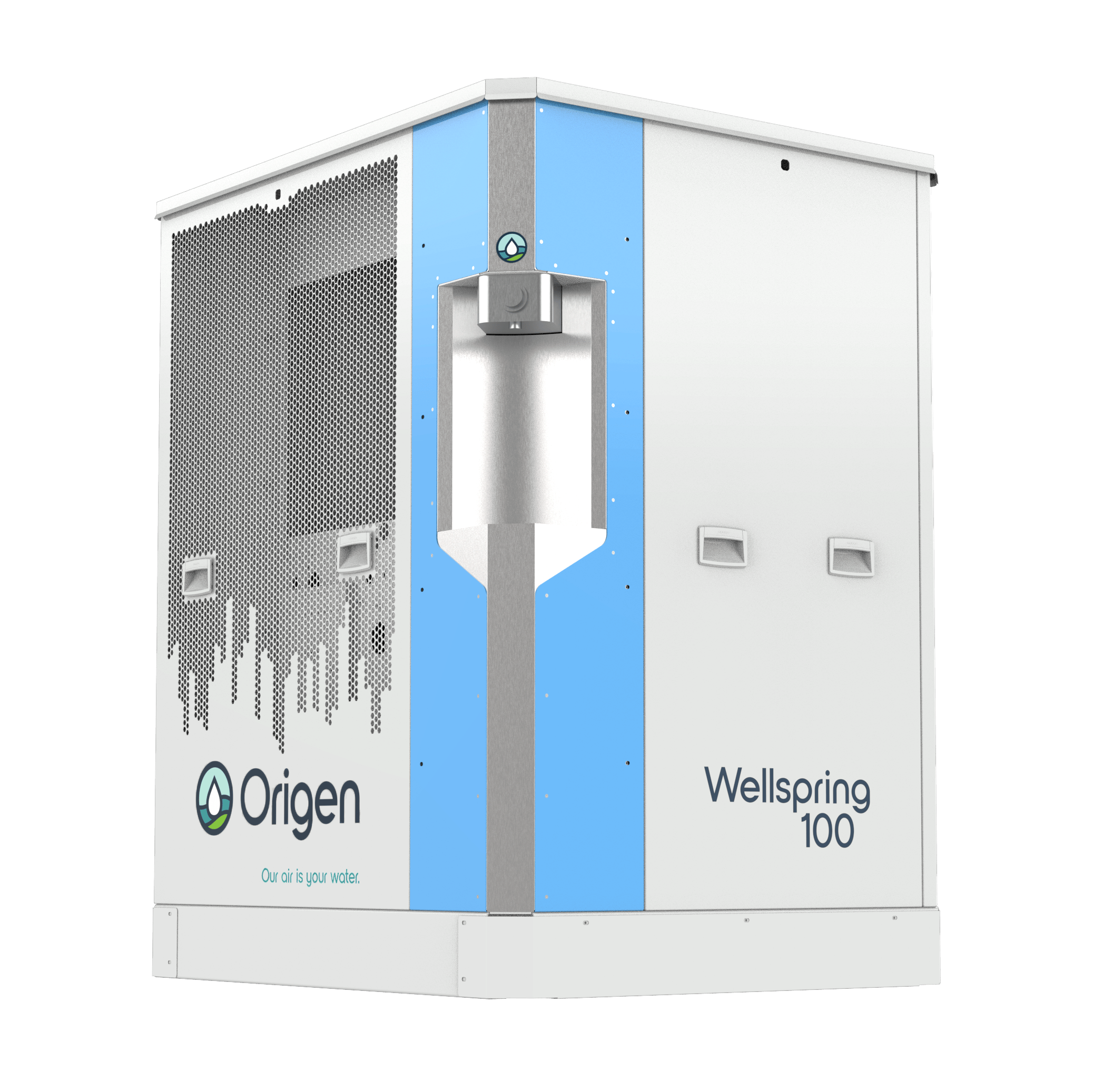
There are bottled water alternatives in disaster recovery situations, though they come with their own set of infrastructure challenges. Atmospheric water generation (AWG) systems, for instance, face hurdles in disaster zones. But once implemented, they could remove the most persistent transportation bottleneck.
With an AWG system on-site, cities won’t have to get emergency water trucked on-site multiple times.
“With an AWG system, you bring the source in once and can keep generating water on-site,” he explains. “You can also put multiple generators dispersed in an area instead of dropping 200,000 bottles of water in a central location and worrying how to distribute it.”
Airlifting one machine into a disaster recovery zone is much simpler than repeatedly airlifting containers and pallets filled with water bottles. This reduces ongoing logistical costs while also enabling cities to prepare for a disaster recovery situation well in advance.
Ideally, a container or a trailer with an AWG installed would be kept in a strategic holding area. Then, when a disaster situation occurs, deploying the machine would be fairly simple.
“Just put the AWG machine in place, turn it on, and start making water with it,” Waetjen says.
While transportation is important, cost is the true baseline for disaster recovery. During extreme weather events, FEMA can pay up to $20 a gallon for water. In contrast, a gallon of water could cost no more than $10 with an AWG on-site in an extreme disaster recovery situation. In more common disaster scenarios, AWGs could cost between $2-$4 per gallon*, while historically FEMA has costed $3-$7 for the same assistance after warehousing, handling, transportation, and efficiency are taken into account.
Behind every lost pallet and dollar spent on storage is a community waiting for emergency drinking water. Logistical failures are expensive, but the cost of getting it wrong isn’t just measured in dollars.
*Final performance specifications are subject to engineering validation and testing and may vary from the values shown.

Leave a Reply
You must be logged in to post a comment.