

Clean Water Deserves Honest Engineering
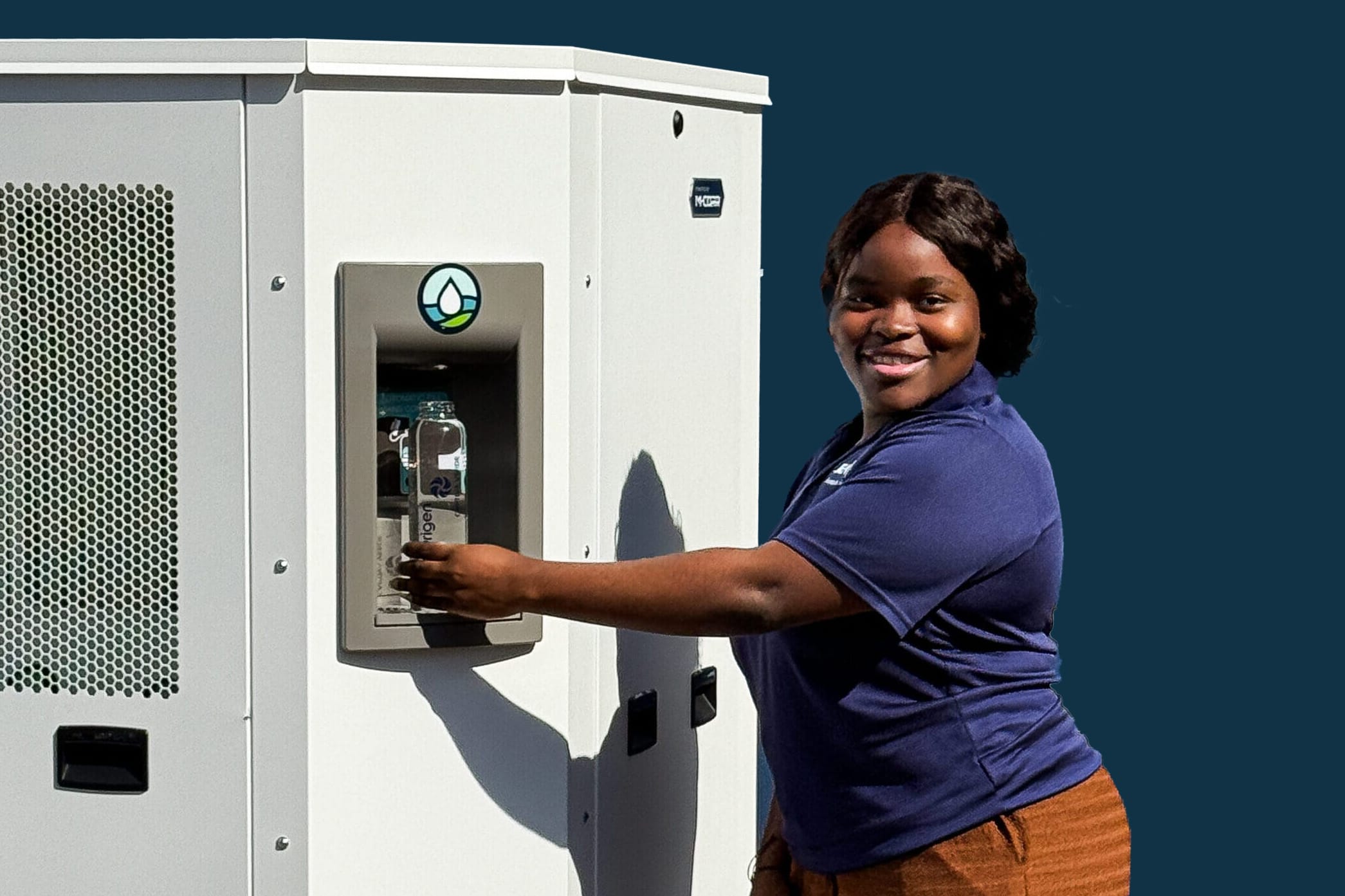
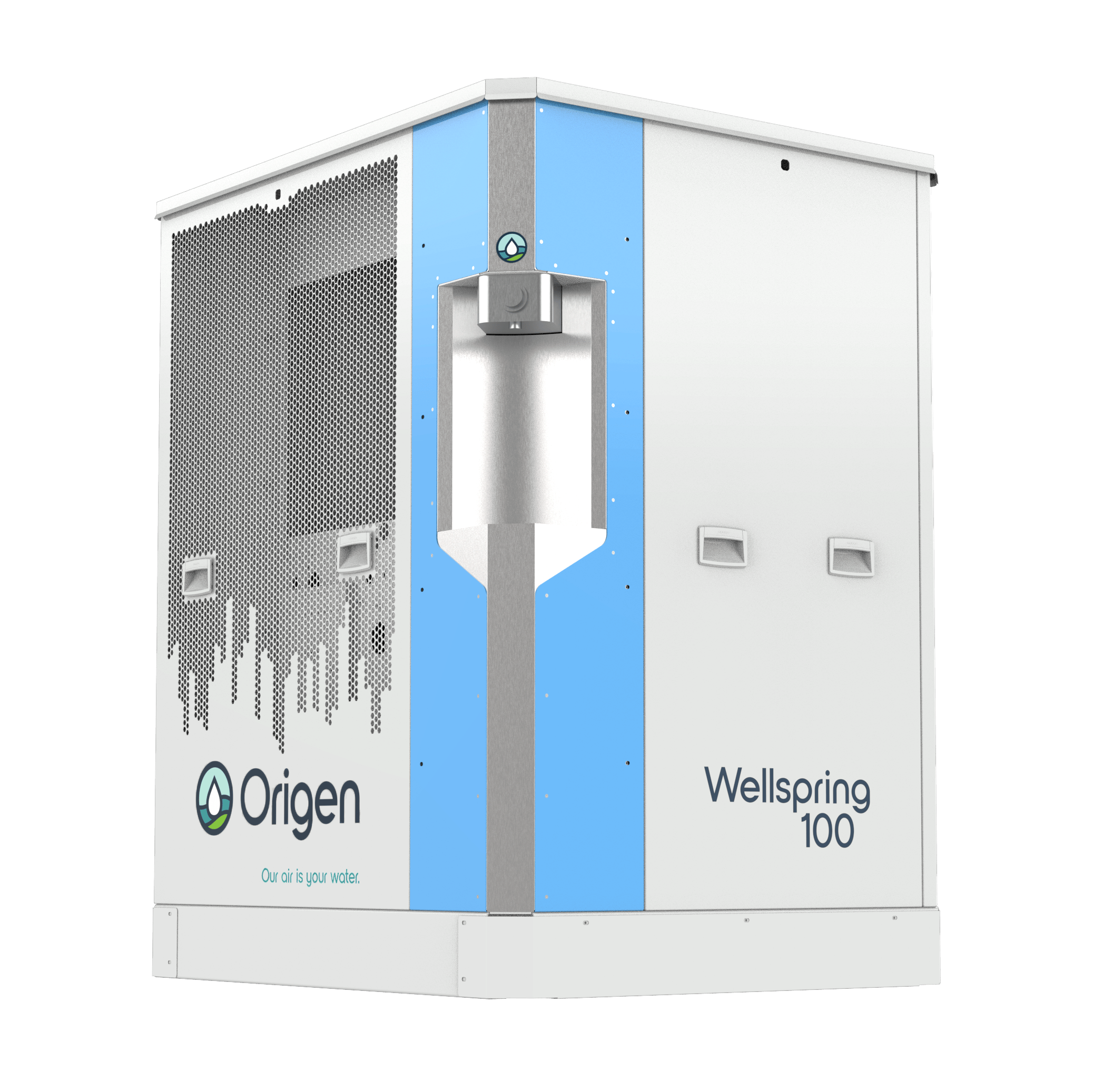
The Wellspring 100’s M-CoRR®® technology is redefining efficiency in atmospheric water generators.
When comparing atmospheric water generators in the market, it’s important to understand that water production claims aren’t always measured the same and some can be misleading. In many cases, atmospheric water generation (AWG) companies will intentionally confuse the performance of their machines. Many will claim higher production because they are using saturation environmental conditions instead of more realistic operating conditions.
“A customer may see that the Wellspring 100 and another machine both produce about 100 gallons a day,” says Scott Sloan, senior engineer at Therma-Stor and Origen. “What they’re not seeing is that the other company is making their claims at a higher dew point.” It’s like comparing apples and oranges.
If the same machine were to operate at Origen’s rated conditions, it would only pull between 62-68 gallons per day—that’s a 35 gallon difference. This confusion isn’t limited to saturation rates, as it extends to efficiency figures as well. Some companies will claim their machines produce a certain amount of water without explaining the environmental factors involved at all. “Their operating ranges are less than ours and their efficiencies are lower than ours,” he explains. “But when they artificially rate it at a higher dew point, it makes their efficiency look better.”
This illustrates an important factor when comparing manufacturers—water production rates should be compared using the same environmental conditions. Additionally, if the dew point conditions aren’t shared at all, there may be a reason why.
Origen’s Wellspring 100 operates more efficiently, and that’s largely due to its patented M-CoRR®® technology.
Understanding M-CoRR®® Technology
Engineered to Make AWGs More Efficient at a Wider Operating Range
M-CoRR®®’s three-coil design is the Wellspring 100’s key differentiator—it’s designed to do what other AWGs can’t. Each coil has a purpose:
Pre-Evaporator Coil
Cools incoming air before it reaches the main evaporator, increasing system efficiency.
Evaporator Coil
Further reduces air temperature, allowing for maximum moisture extraction.
Recovery Coil
Captures and recycles energy back into the system, reducing overall power draw.
The M-CoRR®® design allows for up to 40% more moisture collection per kilowatt-hour compared to legacy AWG systems.
The M-CoRR®® Difference
Recovering Energy for Greater Cost Savings
Standard refrigeration systems typically only have one evaporator. That one evaporator must accomplish two things: cool the air down and remove the water. All the energy it takes to cool the air is then blown back into the system.
The M-CoRR®® technology, on the other hand, uses three coils to recover some of that energy. With it, the machine can recover a high percentage of the cold air from a standard system, put it into the refrigeration system, and use it twice.
“The compressor produces energy, and in a standard system, 25 to 40% of that is essentially lost,” he says. “We recover that energy and use it twice. No one else in the world can do that, and that’s what our patent is for.”
But efficiency doesn’t mean much if the water coming out of the machine isn’t safe to drink.
Why Water Quality Matters in AWGs
AWGs are often deployed in water scarce regions that don’t have access to clean drinking water. The water that is available in these regions is contaminated by bacteria, disease, chemicals, and PFAS.
The Wellspring 100’s filtration system addresses each of these directly.
“What’s being underestimated is the quality of the water coming out of the machine,” Sloan says. “It’s producing the highest quality water that’s pure and PFAS free.”
The Wellspring 100 achieves this through its Class A UV filtration system. Most AWG companies use Class B systems, which lose their efficacy as time goes on—the light bulb dims and it doesn’t sterilize anymore. However, the light continues to shine as efficacy decreases, giving the impression that it still works.
“Sterilization is very important for AWGs because we’re storing water,” he says. “When you store water, bacteria can set in—bacteria like the dark and the wet, and those are the exact conditions inside any water storage system.”
In addition to being more effective, the Wellspring 100 uses fewer filters than its competitors.
“We’ve built our filtration system on lab-tested results,” he explains. “A lot of our competitors will throw on filter after filter to the point where it’s overkill.”
This makes it easier for operators to switch out the machine’s filter—they only have to replace one instead of multiple.
Proper filter maintenance is only a piece of the puzzle. Even a well-built machine will underperform if it isn’t deployed properly.
Common AWG Deployment Mistakes
While the M-CoRR®® technology sets the Wellspring 100 apart from its competitors, an operator’s deployment mistakes will impede the performance of any machine.
Here are a few user errors Origen encounters most often:
- Placing the unit in direct sunlight: Extremely hot conditions negatively affect AWG performance. “Any kind of equipment that’s going to bake under the sun is going to have a hard time,” Sloan says.
- Blocking airflow: Keeping consistent airflow is essential for efficient AWG performance. “Don’t butt the unit up against a wall. We see this in a lot of markets and it impedes airflow,” he says.
- Not maintaining a clean environment: Dusty or grimy conditions affect filtration and drive up how often filters need to be replaced.
Even with M-CoRR®® technology, a proper deployment is what closes the gap between potential and performance. For Sloan, that potential still remains untapped.
“With M-CoRR®®, we’re just starting to touch on what this system can do,” he says. “It’s relatively new technology, and there’ll be a lot of development in the future to optimize it, extend operating ranges, and push further. That’s what excites me.”
The Wellspring 100 is redefining what an AWG can do and it’s only the beginning.

Leave a Reply
You must be logged in to post a comment.