
AWG: The Alternative Water Source Gaining Ground in the U.S.
Learn more about the technology that could solve the $9 trillion problem facing the water industry today.
As the need for clean water becomes more dire in the U.S., companies are racing to find a sustainable fix.
And fix is the right word to use. Americans need alternative solutions to getting clean water from pipelines, bottles, and trucks, especially as water infrastructure ages and water main breaks increase in frequency.
On top of infrastructure concerns, clean water is an expensive problem that has severe repercussions for human health.
“The water problem is much greater than the media has led us to believe,” says Jeff Ciachurski, executive chairman for Captiva Verde, a supplier of Origen’s AWGs and builder of atmospheric water stations. “It’s a $9 trillion problem every year.”
This has led Ciachurski to invest in alternative water solutions.
Atmospheric water generation is the most prominent clean water fix he has supported.
What Is Atmospheric Water Generation?
Atmospheric water generators (AWGs) extract water from the air to produce clean drinking water. The most common types of AWGs are condensation-based systems, and they typically follow these four steps:
- Air intake. Fans draw filtered air into the unit.
- Cooling. The air passes over refrigerated coils that chill water below its dew point.
- Condensation. Water drops into a collection tray then into the storage tank.
- Purification. The water is filtered, sterilized with UV or Ozone, and remineralized.
According to the Environmental Protection Agency (EPA), AWGs can expand water availability during shortages, contamination events, and water main breaks. Interest in AWG has grown in the last decade as emergency weather events have become more frequent.
Where AWG Makes the Most Sense
The most practical (and important) application for AWG is for potable water.
“When you look at what people are drinking in groundwater across the U.S., it’s very scary,” he says. “Everyone is dealing on borrowed time, and AWG could be a real solution for eliminating toxicity that’s allowed in our drinking water today.”
The chemical levels that are considered safe to consume in drinking water is eye-opening. According to its Drinking Water Regulations, the allowable levels of key contaminants monitored by the EPA are:
- PFAS: 4 parts per trillion (PPT) for key compounds
- Nitrate: 10 parts per million (PPM)
- Lead: 15 parts per billion (PPB)
- Mercury: 2 PPB
- Fluoride: 4,000 PPB
- Cyanide: 200 PPB
- Total Dissolved Solids (TDS): 500 PPM
Even a quick Google search makes the stakes of these chemicals hard to ignore.
In fact, a website from the Environmental Working Group (EWG) enables people to check the contaminants permitted in their drinking water in just a few seconds. When Ciachurski visited Jacksonville, Fla., for the first installation of Origen’s Wellspring 100 AWG, he checked the chemical levels in the groundwater using the site.
“I typed in the zip code 32224 and it said the water had 34,600% more than the healthy limit for trihalomethanes,” he says. “It’s staggering, and no one really knows what the legal limit for these chemicals is.”
AWG serves as a viable alternative to these problems, but it has a few limitations based on location and government regulations.
Addressing Limitations in AWG
Temperature and circumstance play a major role in how effective AWG is. These systems work best in humid regions and at a smaller scale.
“The low-hanging fruit is definitely the state of Florida,” Ciachurski says. “The machine is also really effective in the Carolinas, Georgia, Mississippi, the coastal region of Louisiana, and the entire coastal region of Texas.”
In colder states and arid regions like Arizona and Colorado, it’s more difficult to capture vapor from the air. Origen’s AWG addresses this challenge with its patented Multi-Coil Refrigeration Recovery (M-CoRR) technology, which performs in a wider dewpoint operating range. This allows operators to pull more water from the air even when humidity is low.
Location isn’t the only limiting factor. Scale has posed several challenges, as AWGs can only produce around 100 gallons of water depending on weather conditions and temperature. While not limited to these applications, AWGs have been effectively used in disaster recovery situations, the military, and schools in the tropics that have limited access to clean drinking water.
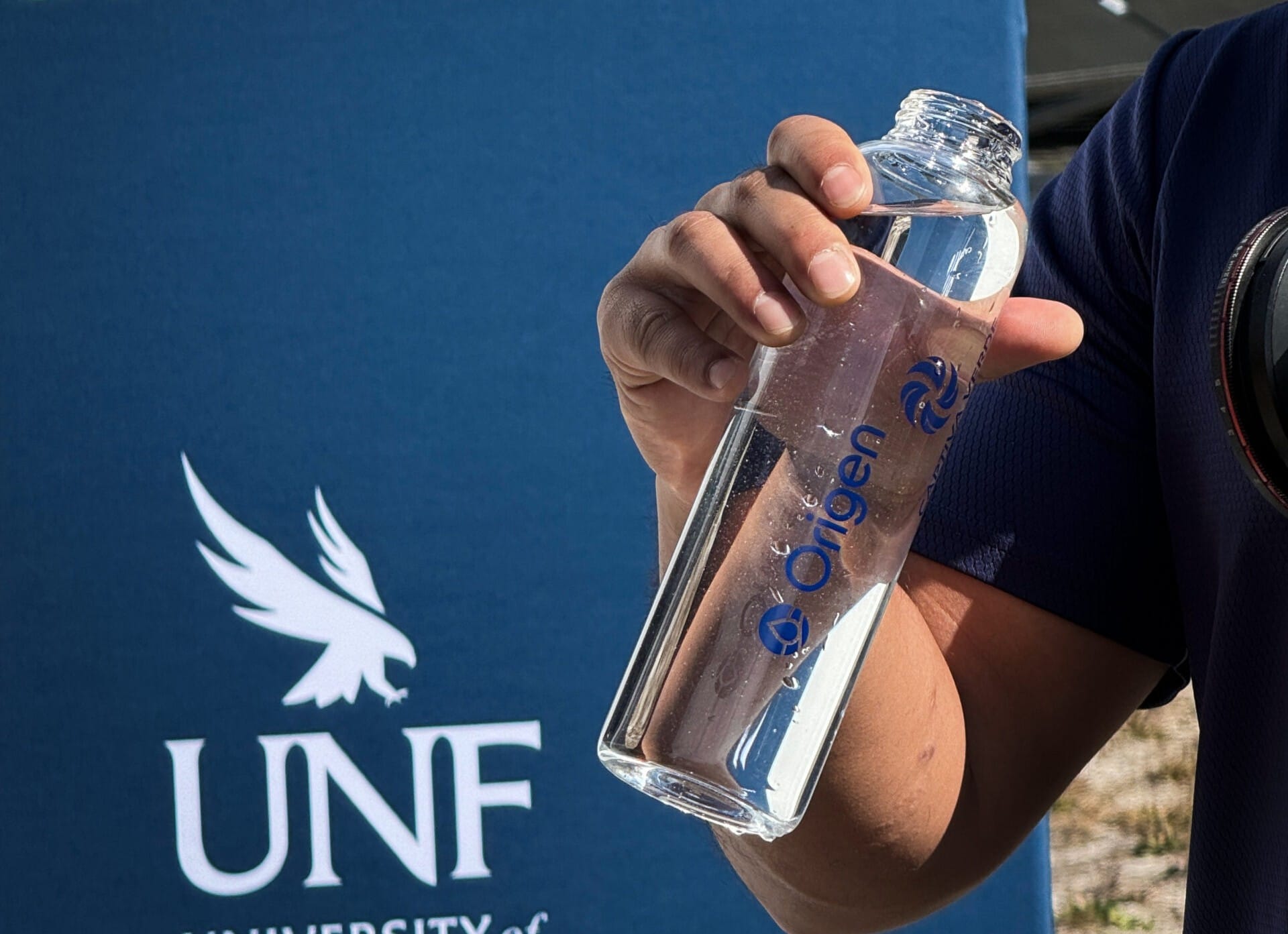
But once more research is conducted on AWG, like the current project at the University of North Florida, Ciachurski is confident that utilities and municipalities will be more likely to implement it.
“When they grasp that AWG is cost-effective and it generates pure water, it will be an easy sell,” he says. “I think we’ll see a commercial facility generating 10,000 gallons with AWG in the next six to nine months.”
The Bigger Picture
AWG’s benefits go beyond cost and human health—it could be essential to solving the $9 trillion problem the water industry is facing today. Contamination and aging infrastructure don’t have quick fixes, but AWG could be key to getting the U.S. on track.
Knowing how contaminated local groundwater is what makes these water challenges “real” and brings the direness of the situation to light. So, do what Ciachurski did in Jacksonville and see what contaminants lie in the water below.
As groundwater continues to contain lead, PFAS, and trihalomethanes, Americans must realize that the water above them might be the solution they’re looking for.