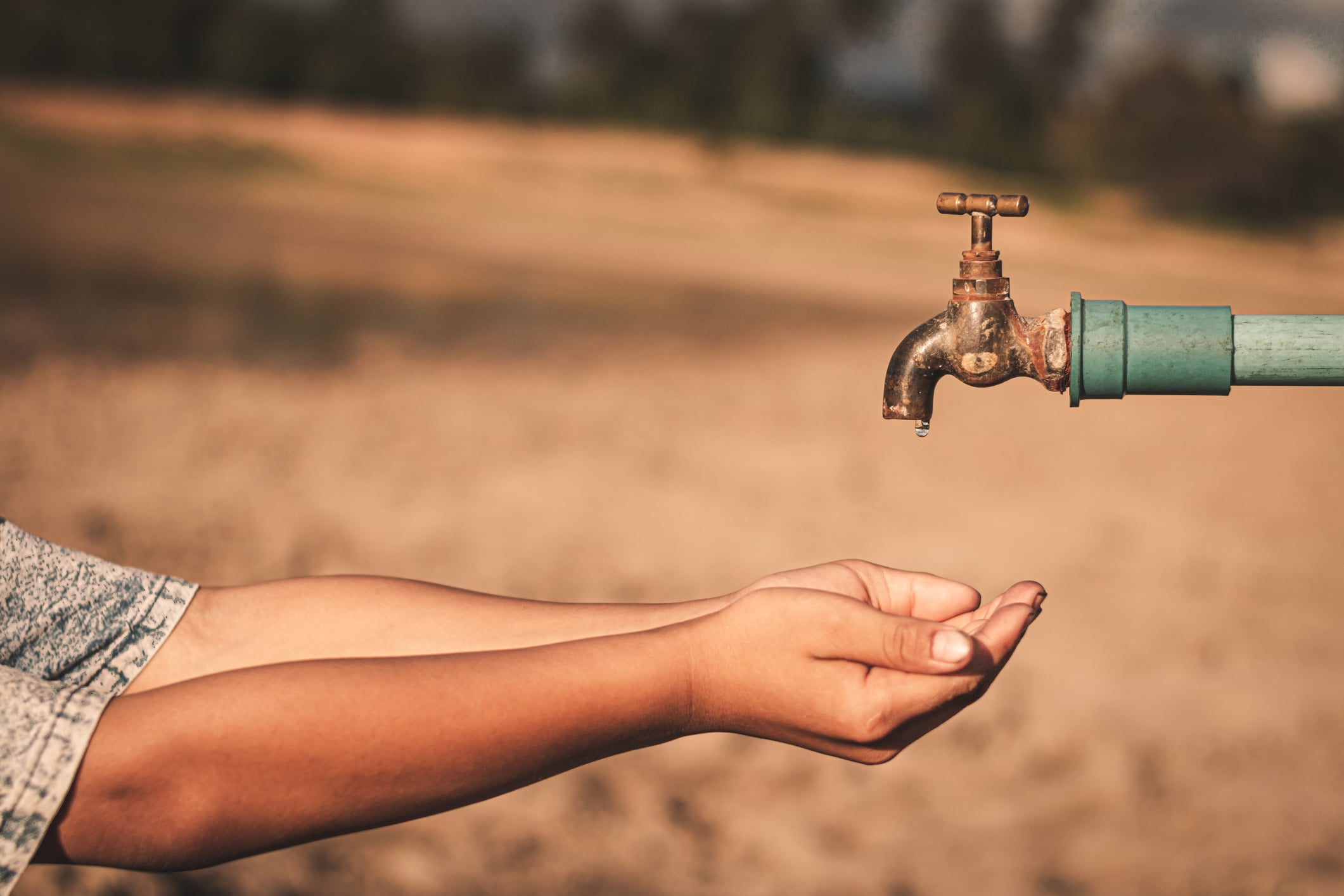
When Wells Run Dry
The MrBeast Controversy Points to a Bigger Water Crisis Solution
YouTube’s biggest star, MrBeast, has faced unexpected backlash over what should have been an uncontroversial good deed: building 100 solar-powered wells across sub-Saharan Africa. The criticism wasn’t about his intentions—it was about what happened next.
The project drew immediate warnings from water infrastructure experts about long-term sustainability. Saran Kaba Jones, founder of FACE Africa, cautioned that, “The issue is sustainability. It’s one thing to go in and install the well, it’s another thing for us to go back to three, four, or five years from now, and see if that well is still functional.”1 Critics also raised concerns about “performative philanthropy”—making a splash for the cameras while potentially leaving communities to deal with long-term maintenance challenges down the road.
But here’s the thing: the experts’ concerns about MrBeast’s wells aren’t based on poor construction—they’re based on the same systemic problems that have plagued rural water projects for decades. And those concerns point to why we need to start thinking beyond traditional solutions.
The Inconvenient Truth About Rural Wells
The statistics are sobering. Research shows that one in three handpumps in sub-Saharan Africa are non-functional at any given time.2 That’s not due to poor engineering—it’s due to a perfect storm of maintenance challenges that traditional well projects consistently underestimate:
- The spare parts desert: When a pump seal fails, it can take months to source a replacement in remote areas
- The maintenance funding gap: Communities are often left to self-fund repairs with no sustainable revenue model
- The expertise shortage: Technical know-how for repairs is concentrated in urban areas, leaving rural communities dependent on outside help
Water system breakdowns force users to use other, often contaminated water sources, and even a few days of consuming water from unimproved sources during a water system breakdown can undermine the health benefits provided by an improved water source.3
This isn’t a failure of wells as technology—it’s a failure of wells as a complete system. And it’s exactly why smart organizations are starting to look at atmospheric water generators (AWGs) not as replacements, but as strategic complements.
The AWG Alternative: Water from Thin Air
Atmospheric Water Generators (AWGs) sound like science fiction, but the technology is surprisingly straightforward. They pull water directly from humidity in the air using either cooling condensation or desiccant materials that absorb moisture. Learn more about how AWGs work.
The game-changing difference? AWGs have dramatically fewer failure points than traditional wells.
A typical well system involves:
- Underground pump mechanisms
- Above-ground motor components
- Power transmission systems
- Water storage and distribution
- Multiple points where contamination can enter
An AWG system involves:
- Direct output to consumption
- Air intake and filtration
- Condensation or absorption mechanism
- Built-in water purification
Modern AWGs include multi-stage filtration, UV sterilization, and mineral balancing—producing consistently safe water regardless of local groundwater contamination or mechanical complexity.
Where AWGs Excel: The Critical Use Cases
Medical Facilities: Life or Death Reliability
Healthcare facilities face particularly acute challenges. Among healthcare facilities in Tanzania with improved water sources, 50.9% experienced water outages.4 Research across six sub-Saharan African countries found that fewer than 50% of rural healthcare facilities had access to improved water sources on premises.5
A qualitative and observational study of early discharge from healthcare facilities in Tanzania following childbirth found that lack of access to water for post-delivery bathing and for guests/caretakers to prepare meals at the hospital was a commonly reported reason for leaving facilities less than 24 hours after giving birth.6
An AWG producing 200-300 liters daily would ensure medical facilities never face water shortages that compromise patient care or force early discharge.
Schools: Keeping Girls in Class
Water shortages devastatingly impact girls’ education. Over half of the girls in sub-Saharan Africa who drop out of primary school do so because of poor water and sanitation facilities.7 Eleven-year-old Janet from Mutiuni Primary School in Southeast Kenya captures this reality: “I have to walk about five kilometers to school carrying water in a jerrycan every day, which leaves me too tired to concentrate on my studies. Also, I have to forego coming to school when there is no water at home to avoid punishment from the school administration.”8
After making provisions for safe water and latrines at two schools, Lifewater’s partner in Kenya reported a reduction in girls being pulled from class to fetch water. They also noted a “remarkable increase in female enrollment.”9
Emergency Response: When Everything Else Fails
After flooding contaminates local water sources, or during drought when wells run dry, AWGs can provide immediate relief without waiting for infrastructure repairs. Emergency response teams increasingly carry portable AWG units for exactly this reason.
The Economics: When Do AWGs Make Sense?
The cost equation for AWGs has shifted dramatically in recent years. Origen’s patented MCORR technology allows for water to be extracted from air from a wide range of temperatures and relative humidities. This range, coupled with increased energy efficiency, makes AWGs the smart solution for the future.
Traditional Wells:
- Lower upfront operational costs
- High vulnerability to breakdown
- Expensive emergency water trucking during outages
AWGs:
- Higher energy costs but predictable output
- Minimal maintenance requirements
- Cost-effectiveness depends on the capacity of the machine, local humidity and temperature conditions, and the cost to power the unit
The Hybrid Solution: Why Not Both?
The smartest water security strategies don’t choose between wells and AWGs—they use both strategically.
A resilient water system might include:
- Primary supply: Solar-pumped well serving 80% of daily volume
- Backup supply: Solar-powered AWG producing 200-500 liters/day for drinking water and critical needs
- Emergency protocol: AWG maintains essential services during well maintenance or failure
This approach provides both capacity and resilience. When the well works, the AWG supplements and extends the supply. When the well fails, the AWG keeps critical functions running.
Learning from MrBeast: Building for the Long Term
MrBeast’s wells aren’t failures—they’re learning opportunities. They’ve highlighted that sustainable water access requires more than just drilling holes in the ground. It requires thinking systematically about maintenance, backup plans, and long-term resilience.
The controversy has sparked important conversations about:
- Maintenance funding models that don’t burden communities
- Technology diversification to reduce single points of failure
- Local capacity building for long-term sustainability
AWGs represent one piece of this puzzle—not a silver bullet, but a strategic tool for building more resilient water systems.
The Path Forward: From Headlines to Solutions
Water insecurity in sub-Saharan Africa affects 400 million people. High-profile projects like MrBeast’s wells serve a crucial role in raising awareness and delivering immediate benefits. But lasting solutions require a portfolio approach that combines the volume capacity of wells with the reliability advantages of AWGs.
The question isn’t whether AWGs are better than wells—it’s how we can intelligently combine both technologies to create water systems that work today and keep working tomorrow.The MrBeast controversy has done something valuable: it’s forced us to think harder about what sustainable water access really means. And increasingly, that means building systems with redundancy, reliability, and resilience built in from day one.
Want to learn more about water security solutions? Contact our team for technical specifications and case studies on hybrid water systems.

- 1 Ronad, Issy and Stephanie Busari, MrBeast: American YouTuber builds 100 wells in Africa, attracting praise – and some criticism.” CNN, 6 Nov. 2023, www.cnn.com/2023/11/06/africa/mrbeast-100-wells-africa-intl-scli/index.html. ↩︎
- 2 Geere, J.A., Hunter, P.R., Jagals, P. “Water system hardware and management rehabilitation: qualitative evidence from Ghana, Kenya, and Zambia.” BMC Public Health, 2019. Available at: https://www.ncbi.nlm.nih.gov/pmc/articles/PMC5469691/ ↩︎
- 3 Exum, N.G., et al. “Water, Sanitation, and Hygiene in Rural Health-Care Facilities: A Cross-Sectional Study in Ethiopia, Kenya, Mozambique, Rwanda, Uganda, and Zambia.” The American Journal of Tropical Medicine and Hygiene, 2017. Available at: https://www.ncbi.nlm.nih.gov/pmc/articles/PMC5637612/ ↩︎
- 4 Exum, N.G., et al. “Water, Sanitation, and Hygiene in Rural Health-Care Facilities: A Cross-Sectional Study in Ethiopia, Kenya, Mozambique, Rwanda, Uganda, and Zambia.” The American Journal of Tropical Medicine and Hygiene, 2017. Available at: https://www.ncbi.nlm.nih.gov/pmc/articles/PMC5637612/ ↩︎
- 5 Benova, L., et al. “Water, sanitation and hygiene infrastructure and quality in rural healthcare facilities in Rwanda.” BMC Health Services Research, 2017. Available at: https://bmchealthservres.biomedcentral.com/articles/10.1186/s12913-017-2460-4 ↩︎
- 6 TBA ↩︎
- 7 UNICEF and WSSCC. “Water and Education: How Safe Water Access Helps Schoolchildren.” Lifewater International, 2014. Available at: https://lifewater.org/blog/water-education/ ↩︎
- 8 “Why Becoming Educated is Hard in Sub-Saharan Africa – Especially for Girls.” The Water Project, 2023. Available at: https://thewaterproject.org/community/2023/08/03/why-becoming-educated-is-hard-in-sub-saharan-africa-especially-for-girls/ ↩︎
- 9 “Water and Education: How Safe Water Access Helps Schoolchildren.” Lifewater International, 2014. Available at: https://lifewater.org/blog/water-education/ ↩︎