
Want more Origen Stories?
U.S. Navy Field Validation: Water Independence at San Nicolas Island
How atmospheric water generation eliminated a $3,500-per-flight logistics burden — and changed how the Navy thinks about water security.

Cost Per Year to Fly in Potable Water
Water resupply flights cost ~ $3,500 each week
The Challenge: Supplying a Remote Island with Pure Water
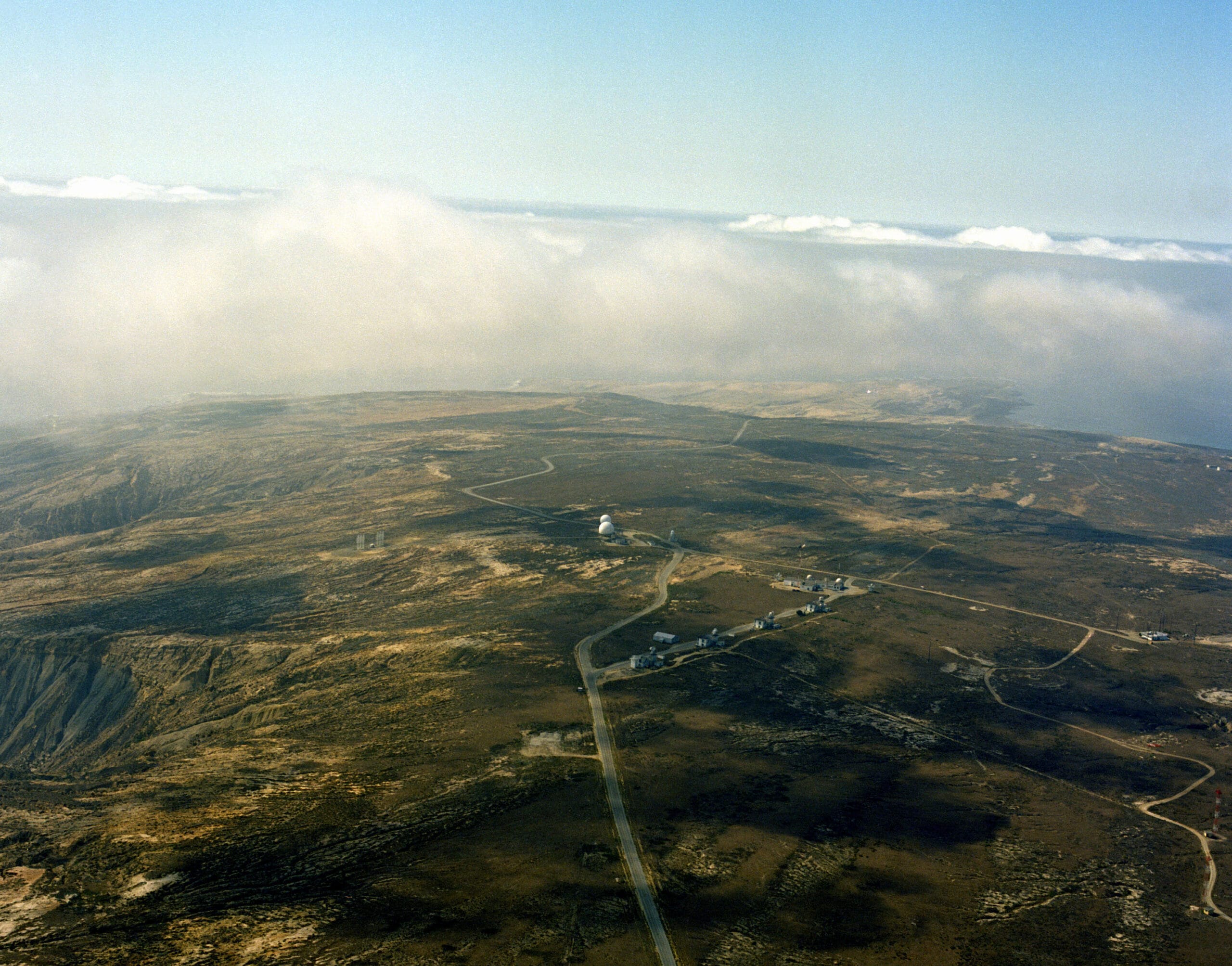
San Nicolas Island sits roughly 60 miles off the coast of Southern California — remote, infrastructure-limited, and entirely dependent on external water supply chains. The Naval Base Ventura County installation there relied on aging pipe infrastructure and routine cargo flights to keep personnel hydrated. The pipes, described by Navy personnel as “old and rusty,” delivered technically potable water — but with visual clarity issues that undermined confidence in the supply.
The logistics burden was significant: roughly 15 five-gallon containers per cargo flight, at an estimated $3,500 per flight, weekly. For a single remote installation, that expense compounds quickly. For the broader Navy, it represents a vulnerability that recurs across dozens of installations worldwide.
Replacing the pipes was the obvious long-term fix — but funding and timelines were only part of the problem. San Nicolas Island is a federally protected wildlife habitat, and the Navy was denied environmental approval to replace the infrastructure. The pipes would stay. In the meantime, personnel needed water — and in active deployments, the equation becomes more serious: water resupply convoys and cargo missions put people in harm’s way.
The Deployment: Our Prototypes Performed Under Pressure
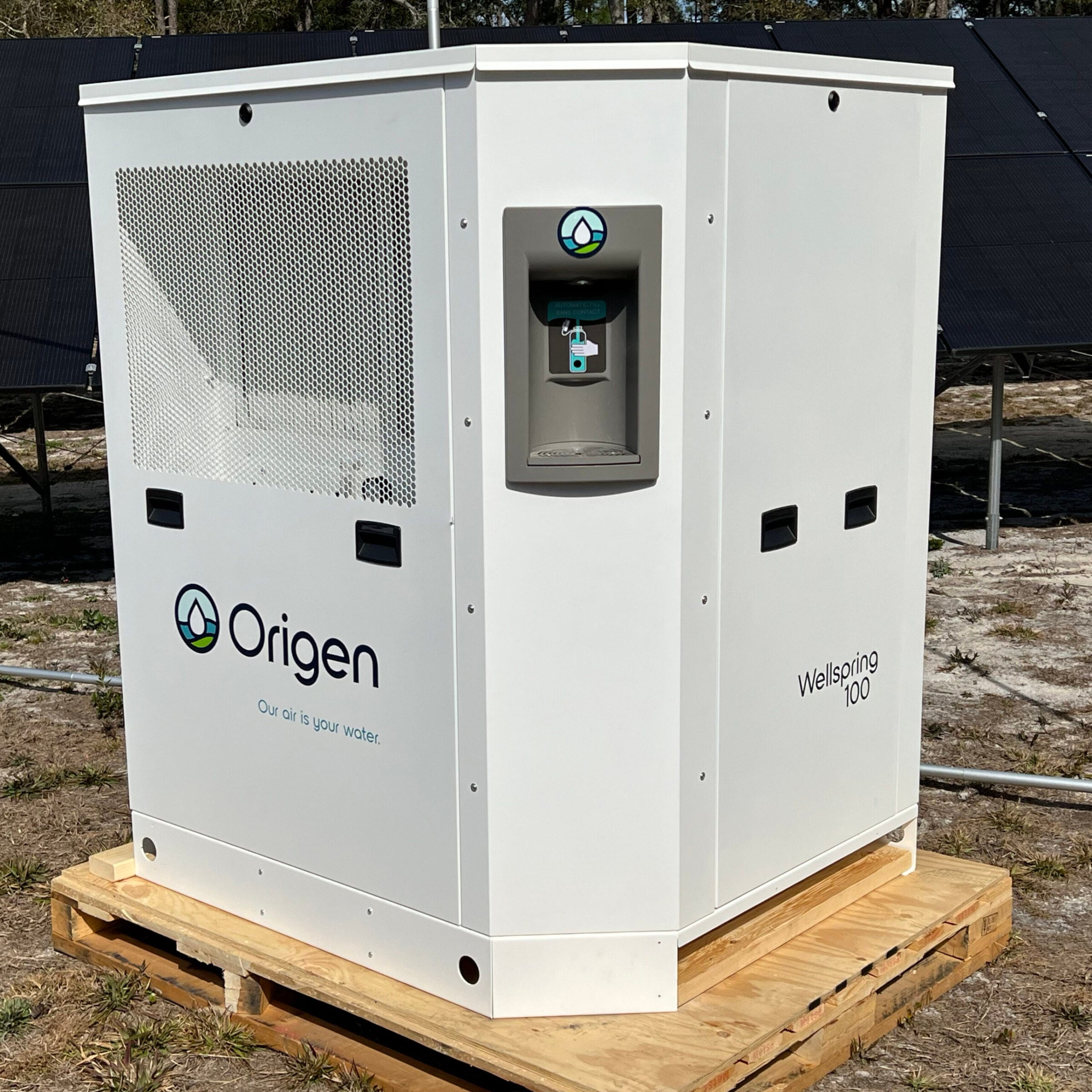
In 2025, as part of the Advanced Naval Technology Exercise (ANTX) Coastal Trident program, the atmospheric water generation (AWG) technology that would become the foundation of the Origen Wellspring AWG was brought to San Nicolas Island for field evaluation.
The validation began conservatively — a demonstration in the Fathomwerx building at the commercial Port of Hueneme under suboptimal conditions (temperatures fluctuating between 67–71°F). Output under those conditions: 5 gallons per 24 hours. Not remarkable on its own — but a proof point that the system functioned where conditions were far from ideal.
At the island, units were placed in two environments: a high-traffic lounge at the Navy Gateway Inn and Suites, and a hangar supporting a critical defense partner. The results were immediate. The hangar unit directly replaced the need for cargo-flighted water containers — eliminating the recurring $3,500-per-flight operational cost for that location alone.
The Results:
Pure Water, No Convoy Necessary
The numbers tell the story plainly.
The Navy was paying roughly $3,500 per week to cargo-flight water to San Nicolas Island — water that, once it traveled through the base’s aging pipe infrastructure, tested at 350 ppm total dissolved solids (TDS). That’s within the regulatory limit of 500 ppm, but it’s not a number anyone feels good about.
The field prototype deployed during the ANTX evaluation produced water with approximately 5 ppm TDS — a figure reflecting the prototype configuration, before remineralization. That number matters for context: ultra-low TDS water in that range is ideal for equipment like humidifiers, CPAP machines, ice machines, and coffee equipment — but it’s not optimal for drinking.
The final production Wellspring AWG is engineered with a full remineralization stage, producing water at 60–70 ppm TDS — the ideal range for drinking water. For reference: water under 150 ppm and above 50 ppm is considered high-quality potable water. Anything below 50 ppm is effectively distilled water — technically clean, but lacking the trace minerals the body needs.
At 2 ppm before remineralization and 60–70 ppm after, the Wellspring’s output profile gives operators flexibility: quality drinking water from the dispenser, ultra-pure water available for equipment use.
Either way, no supply chain, convoy, or logistics coordinator required.
“The best part of this story is the expected lives saved — Sailors and soldiers no longer need to be sent into harm’s way to deliver water into an active combat zone. With one of these machines in a vehicle or shipped in a case, you have water as long as you have power.”
Brendan Applegate
Lead for Fleet Experimentation and Exercises, NSWC PHD, Office of Technology
What This Means for Defense Procurement
The San Nicolas Island validation demonstrated several capabilities that matter to military planners and procurement officers:
Infrastructure independence
AWG systems require no pipeline connection, no reverse osmosis plant, and no reliable municipal supply. In locations where infrastructure is compromised, aging, or nonexistent, they generate water on-site from ambient air.
Logistics elimination
In environments where water delivery requires cargo flights, truck convoys, or supply chain coordination, AWG systems remove the dependency — and the exposure — entirely.
Operational simplicity
Single-operator, single-button operation means no specialized training. Systems can be deployed in a vehicle or shipped on a pallet.
Scalability
Individual units can be deployed for small detachments or arrayed to supply larger forward operating bases. The Origen Wellspring AWG-100 produces +/-100 gallons of clean, filtered water per day (depending on conditions)— scalable through modular deployment to meet the demands of larger installations.
From Field Prototype to Commercial Product
The technology validated at San Nicolas Island has since been developed into the Origen Wellspring 100, engineered by Therma-Stor — a company with five decades of experience in environmental control and water management systems. The Wellspring brings atmospheric water generation capability to a commercial-grade platform, purpose-built for the performance demands of defense, government, and institutional applications.
The Navy’s ANTX evaluation confirmed what the engineering already suggested: that atmospheric water generation is no longer an emerging concept. It is a validated, deployable solution.
Technical Specifications
| Specification | Origen Wellspring AWG |
|---|---|
| Daily Output | up to 103 gallons at 80F, 60% RH* |
| Minimum Operating Humidity | 15% RH |
| Purification | 3-stage microfiltration, UV-C sterilization, proprietary remineralization |
| Power | 230V single-phase |
| Storage | 50-gallon onboard vessel |
| Output Purity | ~2 ppm TDS (pre-mineralization) / 60-70 ppm TDS (post-remineralization) |
*Final performance specifications are subject to engineering validation and testing and may vary from the values shown.

Secure Your Water Independence
Water should never be the weakest link in a mission. Whether you’re evaluating AWG technology for a forward operating base, a domestic installation, or a rapid-response capability, Origen’s team is ready to walk through deployment scenarios, climate performance data, and procurement pathways.